
The Commute Crunch
How Your Drive to Work Affects Your Spine
How Your Drive to Work Affects Your Spine
Most people don’t think twice about their daily drive—but your body does. Long periods behind the wheel can quietly strain your muscles, joints, and posture. Over time, your commute and spine health become closely connected, often leading to stiffness, tension, and discomfort that carry into the rest of your day.
We often see patients whose aches and pains start with their daily commute.
Why Driving Puts Stress on Your Spine
Sitting may feel like rest, but it places pressure on your spine—especially when posture slips. During a typical commute:
- Your lower back lacks proper support
- Your hips tighten and pull on the pelvis
- Your shoulders round forward
- Your neck shifts into a forward, strained position
Even a 20–30 minute drive each day adds up. Over weeks and months, poor posture and repetitive positioning can negatively affect your commute and spine health.
Signs Your Commute Is Causing Problems
Driving-related stress doesn’t always show up immediately. Many patients notice symptoms such as:
- Lower back pain after sitting
- Neck stiffness or tightness
- Shoulder tension
- Headaches after driving
- Tingling or numbness in the arms or hands
These issues often build gradually, making them easy to ignore until they become persistent.
Improve Your Posture on the Road
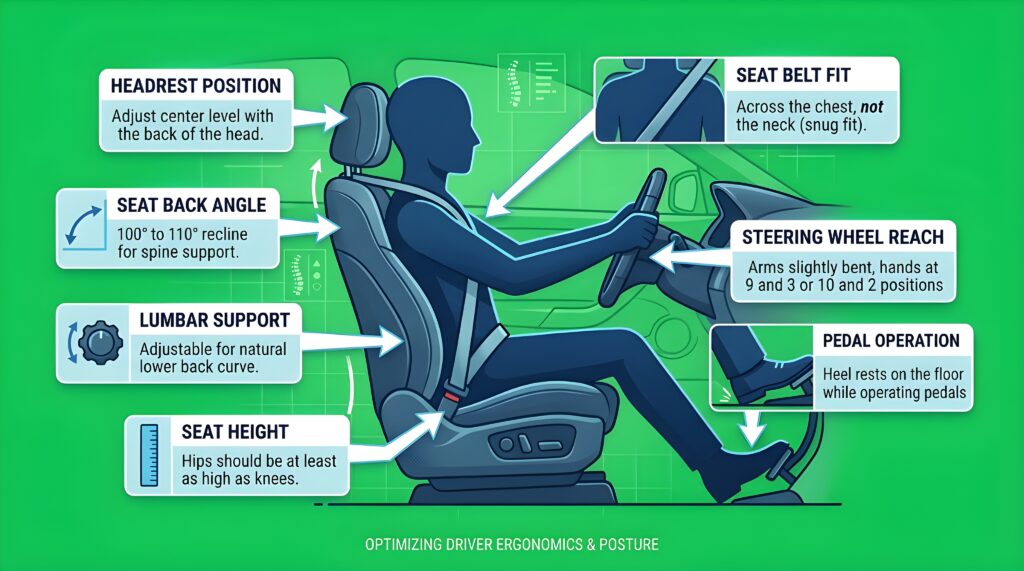
Small adjustments can make a big difference in protecting your commute and spine health:
- Sit fully back in your seat for support
- Keep your knees level with your hips
- Adjust mirrors to promote upright posture
- Relax your grip on the steering wheel
- Take breaks to stretch during longer drives
These simple changes reduce strain and help maintain better alignment.
How Chiropractic Care Helps
Even with good habits, daily driving can still stress your spine. Chiropractic care helps restore alignment, improve mobility, and relieve built-up tension. We address the underlying causes of discomfort so your body can handle daily demands more comfortably.
Make Your Commute Work for You
If you feel stiff, sore, or tense after driving, your body may be reacting to repeated stress. Improving your commute and spine health can help you feel better not just in the car, but throughout your entire day.
Click here to contact Dr. Robin Overstad or call (612) 802-2580
